ongoing
Resilient SisterhoodIndigenous Women and Adaptation to Climate Change in Indonesia

principal investigator / project leader
Ph.D. / Assistant Professor
project value: PLN 703,354
funding source: National Science Center
discipline: social sciences
location: Warsaw
duration: 2025 2026 2027 2028
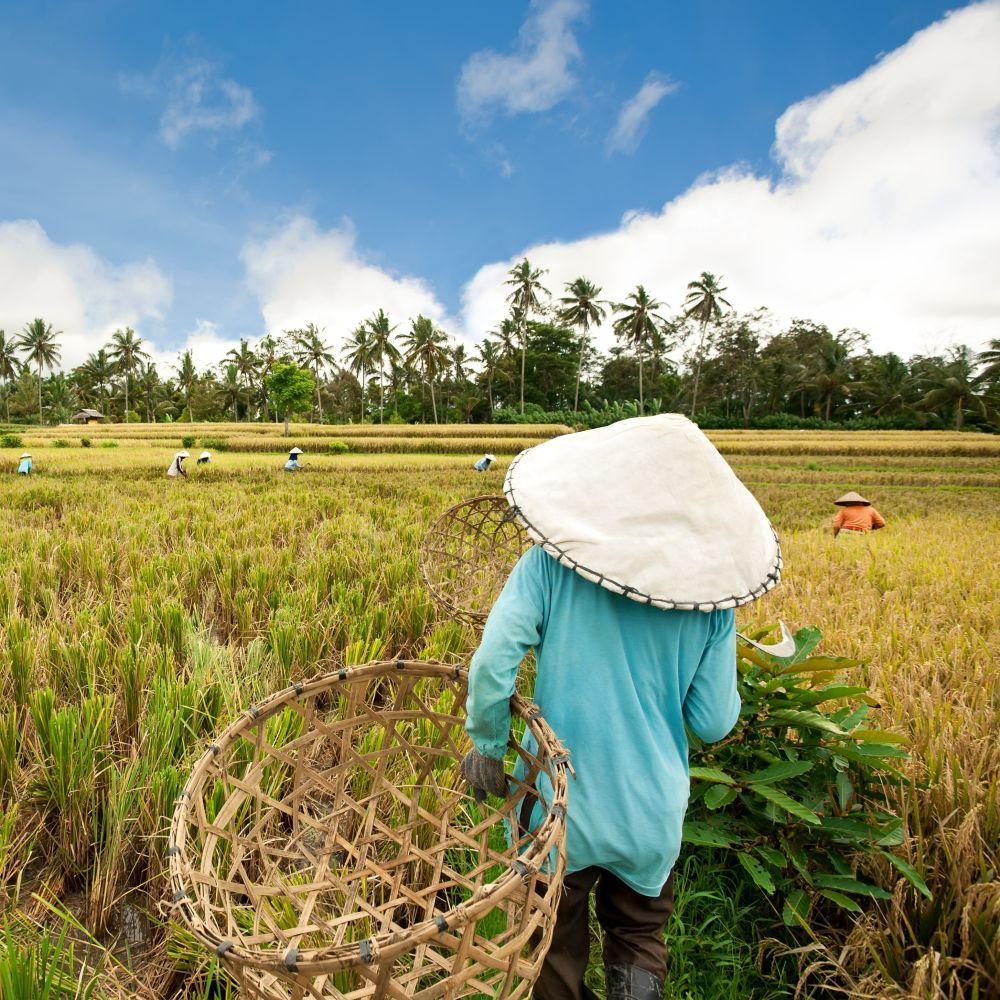
Dr. Katarzyna M. Głąb, from the Institute of Social Sciences at SWPS University, will investigate how Indigenous women in Indonesia cultivate adaptive and sustainable responses to climate change through multispecies sisterhood.
The project is aligned with the UN’s Sustainable Development Goal no. 13 — Climate Action.
The project is financed by the National Science Center, project number 2024/55/D/HS3/02444.
Project objectives
The project assumes that Indigenous women play a crucial yet often undervalued role in climate change adaptation. A central concept underpinning this research is multispecies sisterhood, encompassing not only human relationships but also meaningful connections with non-human actors, emphasizing their mutual interdependence. The project specifically aims to analyze Indigenous cosmologies, everyday adaptive practices, and the intergenerational transmission of ecological knowledge.
Climate change is not only an ecological challenge but also a deeply social and cultural crisis that disproportionately impacts vulnerable communities. Indigenous women, who often occupy critical yet overlooked roles in ecological stewardship, stand at the frontline of this global challenge. The project is uniquely positioned to highlight their essential contributions by exploring how Indigenous women actively foster adaptive strategies through multispecies sisterhood — an inclusive relationship transcending human bonds, embracing ecological interconnectedness and mutual resilience.
Głąb, Katarzyna
Principal Investigator
First and last name
Katarzyna Głąb
Academic degree or title
Ph.D. / Assistant Professor
Email
This email address is being protected from spambots. You need JavaScript enabled to view it.
Role in the Institute
{"funkcja-w-instytucie0":{"Funkcja":"","\u0141\u0105cznik":"","Nazwa w mianowniku":"Institute of Social Sciences"}}
Specialization
social scientist
Role in the Research Center
{"funkcja-w-centrum0":{"Funkcja":"","\u0141\u0105cznik":"","Nazwa w mianowniku":"Youth Research Center"}}
Role in the Department
[]
Ph.D. / Assistant Professor Katarzyna Głąbsocial scientist
Methodology
This is an interdisciplinary project, combining qualitative and quantitative methods. The researcher will apply the ethnographic approach, including:
- Observation of the study participants
- In-depth narrative interviews
- Oral histories
- Visual ethnography.
The fieldwork will be carried out on three islands: Sumba, Timor, and Rote, in the Indonesian province of East Nusa Tenggara.
Practical application of results
The findings will provide valuable insights for local communities, NGOs, and policymakers, enabling more effective planning and implementation of adaptive strategies that integrate Indigenous women’s perspectives and the more-than-human dimension. Additionally, this project will enrich academic discussions on multispecies justice by introducing innovative approaches to climate change adaptation.