
ongoing
Determinants of Public Support for Gender Equality Policies
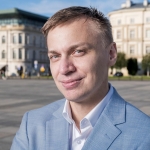
principal investigator / project leader
project value: PLN 1,243,110
funding source: Polish National Agency for Academic Exchange
discipline: social sciences
location: Warsaw
duration: 2026 2027 2028
This project investigates the gap between Poland's widespread abstract support for gender equality and the public resistance to specific equality policies, examining how policy framing, self-interest, and differing goals shape societal attitudes.
Project no. BPN/PPO/2025/1/00050/DEC/1, funded by NAWA under the Polish Rturns (Polskie Powroty) granting scheme
The project is aligned with the following UN Sustainable Development Goals no. 5 — Gender Quality, 16 — Pease, justice, and strong institutions.
Project objectives
This project investigates why public support for specific gender equality policies remains low in Poland, even though gender equality is widely recognized as a fundamental value.
To address this disconnect, the research examines a broad, multidimensional spectrum of policy measures that public institutions can implement to promote equality, including:
- Gender quotas
- Educational support programs
- Health-oriented initiatives
- Equalization of rights and obligations between women and men
Ultimately, the project’s findings will illuminate:
- How the public conceptualizes gender equality and what factors shape attitudes toward specific policies
- How self-interest and social identity influence support for these measures
- How policy framing and communication affect public reception
While the vast majority of Poles express support for gender equality as a core value, the specific measures designed to implement it continue to spark considerable controversy. My research aims to examine the root causes of this disconnect—specifically, whether the disagreement stems from conflicting goals, the strategies employed, or perceptions of who ultimately benefits from these policies. The NAWA Polish Returns program provides an invaluable opportunity not only to investigate these questions, but also to share my experience from Europe’s leading social science institutions with students and doctoral candidates. I am delighted to establish my own research team at SWPS University’s Institute of Social Sciences, an institution with which I already share a strong collaborative history.
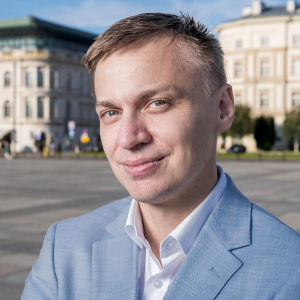
Gulczyński, Michał
Principal Investigator
Specialization
political scientist
First and last name
Michał Gulczyński
Academic degree or title
Ph.D.
Role in the Institute
{"funkcja-w-instytucie0":{"Funkcja":"","\u0141\u0105cznik":"","Nazwa w mianowniku":"Institute of Social Sciences"}}
Discipline
political-science-and-public-administration
Institute
Institute of Social Sciences
Role in the Department
[]
Role in the Research Center
[]
Ph.D. Michał Gulczyńskipolitical scientist
Methodology
The project employs a mixed-methods design, integrating both qualitative and quantitative approaches. Data collection will include 12 focus group discussions, 20 in-depth individual interviews, and at least two nationwide survey experiments.
Host
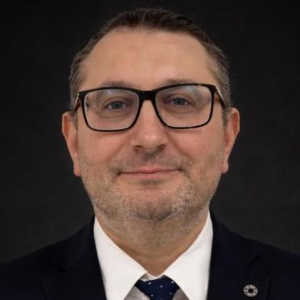
Cześnik, Mikołaj
Director of the Institute of Social Sciences
Role in the Faculty
{"funkcja-na-wydziale0":{"Funkcja":"","\u0141\u0105cznik":"","Nazwa w mianowniku":"Faculty of Social Sciences in Warsaw"}}
Role in the Department
{"funkcja-w-katedrze0":{"Funkcja":"Head","\u0141\u0105cznik":"of the","Nazwa w mianowniku":"Department of Politics and Public Policy"}}
Role in the Institute
{"funkcja-w-instytucie0":{"Funkcja":"Director","\u0141\u0105cznik":"of the","Nazwa w mianowniku":"Institute of Social Sciences"}}
Specialization
sociologist and political scientist, specializes in analysis of political systems
First and last name
Mikołaj Cześnik
Academic degree or title
Professor
Email
This email address is being protected from spambots. You need JavaScript enabled to view it.
Discipline
political-science-and-public-administration
Role in the Research Center
{"funkcja-w-centrum0":{"Funkcja":"","\u0141\u0105cznik":"","Nazwa w mianowniku":"Center for the Study of Democracy"}}
Professor Mikołaj Cześniksociologist and political scientist, specializes in the analysis of poitical systems
Practical application of results
The project’s findings will provide policymakers and practitioners with actionable insights into which gender equality measures enjoy broad support, which face resistance, and the underlying reasons for these responses.
Key outcomes and contributions of the project include:
- Policy Brief: Summarizing the empirical findings, this brief will serve politicians and non-governmental organizations as a practical tool for designing effective policies that foster progress without deepening social polarization.
- Theoretical Framework: Expanding beyond empirical analysis, the project will advance the field academically by developing a new theoretical framework that conceptualizes gender equality policies as a diverse space of distinct strategic options.