About the program
Background
The internet, which at the beginning of its popularity was supposed to be a new space of freedom, a self-regulating and non-hierarchical communication network fitting into the vision of the ‘end of history’ and becoming a new hope for direct democracy, has joined the list of ‘fallen utopias’ (Tréguer 2019). Transformations in infrastructure and the practices built upon it have changed the functioning of modern societies, but the ongoing centralization and organization of the internet under the dictates of large internet companies has meant that the concepts of the ‘network society’ (Castells 1996) are now being replaced by the ‘platform society’ (van Dijck et al. 2018). Among the processes related to its functioning, those that come to the fore include disinformation, an economy based on the exploitation of individuals and surveillance, and the increasing alienation of users (Mejias, Couldry 2025). Added to this are ecological issues – despite the construction of narratives based on metaphors such as ‘the cloud’, subsequent communication services are embedded in material assemblages that exploit planetary resources and consume ever-increasing amounts of energy and water (Parikka 2015).
Contemporary reflection on aforementioned issues thus requires a shift toward a media ecology perspective, which reveals the intertwined relationship between technological extractivism, and the clash of divergent political paradigms: from the European pursuit of data sovereignty and regulations, through the American market-driven model to digital statism and digital authoritarianism (Bradford 2023, Cinque 2024, Rikap 2025). The internet is even more clearly than in the past not an abstract sphere of information exchange, but a battlefield between infrastructure and counter-infrastructure, a sphere in which the fight against information asymmetry and digital colonialism requires a critical look at the physical appearance of the cloud and the political dimensions of algorithms.
The goal of the Summer School
During the program, we want to examine these and related issues together, using research tools from various disciplines. Our Summer School is a continuation of the Ph.D. Summer School organized by University of Paris 8 in 2025. This means continuing the themes related to critical internet research in terms of infrastructure, social practices, accompanying narratives, but also legal regulations and changes in all these elements over time. We also want to reflect on the issue of conducting research in different places in Europe and the related experiences, opportunities and limitations therefore, a meeting in Warsaw — one of the dozen cities that used to be called "Paris of the East" — seems to be a good excuse for this.
Format
- Discussion Panels: A key element of your three-day meeting will be the interactive discussion panels. During these sessions, you will present your doctoral research within dedicated thematic blocks, receiving direct feedback and commentary from invited co-speakers. To maximize the value of these sessions, you and your peers will review all distributed papers in advance, enabling you to actively participate in the discussions and contribute your own unique insights.
- Additional Activities and Networking: Beyond the panels, you will engage with guest lectures, participate in an educational study visit, and connect directly with practitioners from NGOs actively involved in internet regulation. You will receive the detailed itinerary well in advance, as the final program will be tailored as closely as possible to the specific topics of your submissions.
Time committment
Participating in this course requires your commitment both inside and outside the classroom, including dedicated time to develop your paper:
- 30 hours classroom instruction
- 20 hours paper preparation
- 20 hours for feedback report and paper corrections
What will you gain?
- Personalized feedback on a research paper or Ph.D. thesis from experts outside your home university
- In-depth knowledge of the relationship between democracy and the structure of communication infrastructures
- In-depth knowledge of interdisciplinary approaches to the subject of infrastructure research
- Advanced skills in researching infrastructures and working with data, including empirical research on communication processes
- Advanced skills of translation of theoretical frameworks and research acumen to practice through interaction with non-academic stakeholders (i.e., NGOs, media outlets)
- Competences of a critical approach to processes of infrastructuring
Application Process
Doctoral Students
Submissions are invited on topics including, but not limited to, the following:
- Media ecologies and infrastructural materiality (e.g. environmental footprint of digital infrastructure, e-waste, low-carbon design, deconstruction of metaphors like “the cloud”, but also infrastructure transformation processes related to centralization and platformization).
- Critical stances and counter-infrastructures (e.g. the shift from techno-utopian freedom to pragmatic resistance, critical media literacy, counter-infrastructural practices, technological imaginaries shaping and/or limiting political possibilities, comparative studies).
- Social, political, and legal dimension of AI (e.g. extractive AI economies, algorithmic policies).
- Ethnographies of the digital (e.g. human-infrastructure encounters, digital resistance, digital labor, social relations inside and outside tech-hubs regions).
- Geopolitics, sovereignty, and digital colonialism (e.g. power dynamics global technological centers and peripheries, regulatory and deregulatory policies towards big tech).
- Economies of attention (e.g. frictions between the rapid production of disinformation and the labor-intensive processes of fact-checking and verification, attention ecologies, economic mechanisms of platformization and their impact on the public sphere and user alienation).
- Critical examination of user interface design and its co-evolution with socio- economic developments
- Historical transformations of hard and soft network infrastructures
Formal requirements
To apply to our Summer School, you must meet the following criteria:
- Submission requiremets:
- Be no longer than 500 words, excluding the list of references
- Contain the title of your presentation
- Include the name(s) of the author(s)
- State funding sources, if applicable
- Language requirements: CEFR C1 English proficiency certificate
Thesis Advisors
Thesis advisors who would like to join us and serve as additional mentors to doctoral students during the Summer School, should email us with the proposed thematic areas, which they could support during the event.
Application deadline: August 9, 2026, by midnight (CEST).
Funding
Persons from ERUA partner universities, other than SWPS University, who are accepted to the program by SWPS University, can apply for travel and accommodation funding at their home university's ERUA Office.
To apply, please send the required documents and information to This email address is being protected from spambots. You need JavaScript enabled to view it.
Meet your lecturers
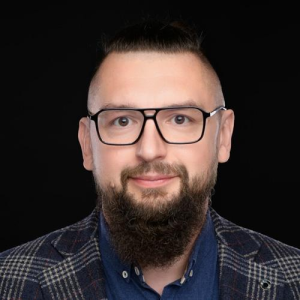
Filiciak, Mirosław
Specialization
cultural researcher specializing in the relationship between new media and cultural participation
First and last name
Mirosław Filiciak
Academic degree or title
Ph.D. / Associate Professor
Email
This email address is being protected from spambots. You need JavaScript enabled to view it.
Position
profesor uczelni
Role in the Faculty
{"funkcja-na-wydziale0":{"Funkcja":"","\u0141\u0105cznik":"","Nazwa w mianowniku":"Faculty of Humanities in Warsaw"}}
Role in the Department
{"funkcja-w-katedrze0":{"Funkcja":"Head","\u0141\u0105cznik":"of the","Nazwa w mianowniku":"Department of Cultural Studies"}}
Role in the Institute
{"funkcja-w-instytucie0":{"Funkcja":"Director","\u0141\u0105cznik":"of the","Nazwa w mianowniku":"Institute of Humanities"}}
Role in the Research Center
{"funkcja-w-centrum0":{"Funkcja":"Head","\u0141\u0105cznik":"of the","Nazwa w mianowniku":"Center for Cultural Research of Technologies"}}
Discipline
culture-and-religion-studies
Ph.D. / Associate Professor Mirosław Filiciakcultural researcher specializing in the relationship between new media and cultural participation
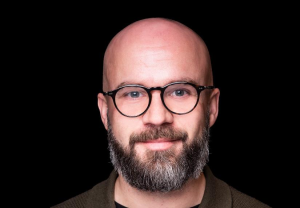
Piwowar, Kuba
Specialization
sociologist and cultural researcher
First and last name
Kuba Piwowar
Academic degree or title
Ph.D. / Assistant Professor
Role in the Faculty
{"funkcja-na-wydziale0":{"Funkcja":"","\u0141\u0105cznik":"","Nazwa w mianowniku":"Faculty of Humanities in Warsaw"}}
Role in the Department
{"funkcja-w-katedrze0":{"Funkcja":"","\u0141\u0105cznik":"","Nazwa w mianowniku":"Department of Cultural Studies"}}
Role in the Institute
{"funkcja-w-instytucie0":{"Funkcja":"","\u0141\u0105cznik":"","Nazwa w mianowniku":"Institute of Humanities"}}
Email
This email address is being protected from spambots. You need JavaScript enabled to view it.
Role in the Research Center
{"funkcja-w-centrum0":{"Funkcja":"","\u0141\u0105cznik":"","Nazwa w mianowniku":"Center for Cultural Research of Technologies"}}
Ph.D. / Assistant Professor Kuba Piwowarsociologist and cultural researcher
Organizers
Funding sources
The project is co-funded by the European Union.
Contact
USWPS Office for International Cooperation: This email address is being protected from spambots. You need JavaScript enabled to view it.