Artificial intelligence is rapidly transforming the landscape of teaching and learning, and higher education institutions are feeling that pressure acutely. The question is no longer whether to adopt these tools, but how to integrate them thoughtfully—focusing on critical thinking, ethical standards, and a human-centered approach. Addressing this challenge was the core mission of the AI-CARE Interuniversity Workshop on AI-Enhanced Teaching, Ethics, and Critical Thinking. An initiative of the European Reform University Alliance (ERUA), the event was hosted by SWPS University in Warsaw on May 25–26, 2026.
Practical approach to AI in education
The workshop marked an important milestone for the Artificial Intelligence for Critical Awareness, Responsibility, and Ethics (AI-CARE) project, which is coordinated by Professor Paweł Pyrka and Marcin Szwed from the SWPS University’s Faculty of Humanities in Warsaw.
Over two days, the Warsaw campus became a space for practical and candid conversation about AI's role in higher education. Educators, researchers, and project coordinators from five partner universities, including SWPS University (Poland), Mykolas Romeris University (Lithuania), New Bulgarian University (Bulgaria), University of Las Palmas de Gran Canaria (Spain), and the University of Macerata (Italy), came together, united by a common ambition — to develop tangible and practical methods that could help both teachers and students engage with AI tools responsibly.
Program
The program blended structured presentations with highly interactive sessions.
- Practical AI Integration in Higher Education: Dr. Maciej Kościelniak, Assistant Professor and the Dean's Representative for Academic Innovation at the Faculty of Psychology and Law in Poznań, shared practical strategies for integrating AI tools into daily university instruction.
- Ethical Considerations and Social Responsibility in Educational AI: Two leading experts in the field — Professor Paulius Pakutinskas (Head of the LegalTech Centre at Mykolas Romeris University and UNESCO Chair expert on AI and Emerging Technologies) and Professor Benedetta Giovanola (Full Professor of Moral Philosophy at the University of Macerata and holder of the UNESCO Chair on Ethics of AI and Practical Wisdom) — examined the ethical dimensions of educational AI. Together, they outlined the critical considerations necessary for balancing technological adoption with social responsibility.
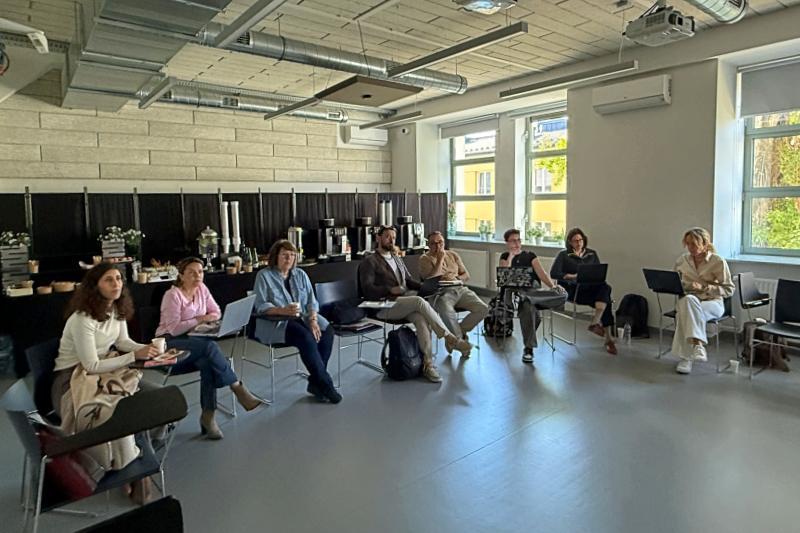 Members of the AI-CARE project team during a workshop at SWPS University in Warsaw
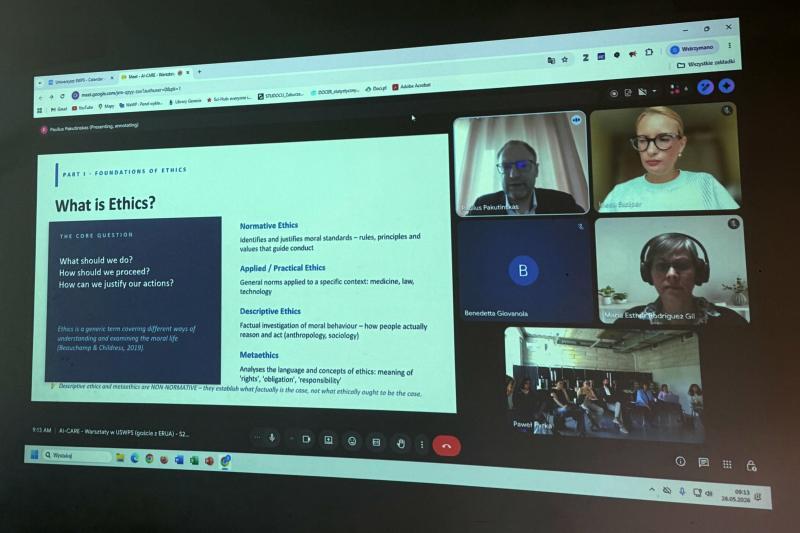 Connecting with the AI-CARE team members in other locations
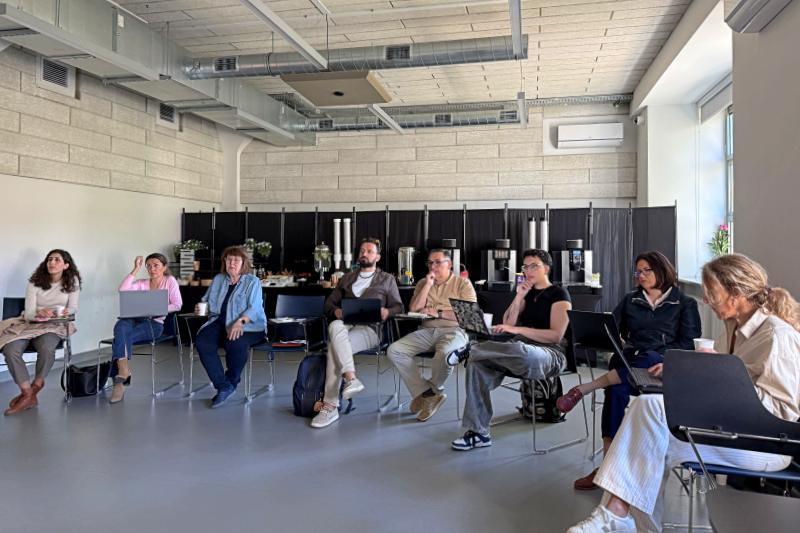 Participants of the AI-CARE project team at USWPS in Warsaw
Format
A defining feature of the workshop was its hands-on, collaborative spirit. Rather than attending passive lectures, participants engaged directly in peer-learning sessions and working groups to collectively address emerging challenges in the field:
- Enhancing Critical Thinking: Designing pedagogical methods that sharpen students' critical thinking when using AI.
- Analyzing Preliminary Data: Interpreting early data from the project's diagnostic questionnaires regarding best practices.
- Developing Educational Resources: Building practical Open Educational Resources (OER) and comprehensive pedagogical guidelines.
- Applying Pilot Program Insights: Learning from the ongoing teaching pilots at ULPGC, which are set to launch in the upcoming academic year.
Network of educators
Beyond the formal agenda, the Warsaw meeting provided the consortium with invaluable face-to-face engagement. Project coordinators had space to connect, share ideas openly, and deepen the trust that makes cross-border collaboration actually work.
At its core, the AI-CARE project provides a durable foundation for a network of educators who bring both ethical clarity and critical awareness to every encounter with artificial intelligence in the classroom.
ERUA Member Universities
Funding