ongoing
Judges as ChroniclersThe representation and interpretation of history by international tribunals
principal investigator / project leader
historian, political scientist, lecturer in German, specializies in issues of European integration, totalitarian regimes and transitional justice
Full bio project value: PLN 378,593 (EUR 89,020)
funding source: Deutsch-Polnische Wissenschaftsstiftung (DPWS)
discipline: law, political and administrative sciences, sociology
location: Warsaw
duration: 2024 2025 2026 2027
Researchers from SWPS University will examine the role of International Criminal Courts (ICC) as chroniclers of history, i.e., institutions that intentionally, or unintentionally, contribute to specific interpretations of the events they judge.
The project is aligned with the UN’s Sustainable Development Goal no. 16 — Peace, justice, and strong institutions.
Project funding: the German-Polish Science Foundation (DPWS), project no. 100-2024-00802.
Gefördert aus Mitteln der Deutsch-Polnischen Wissenschaftsstiftung.
Project objectives
The development of international criminal law after the end of the Cold War sparked a heated controversy regarding the role of related institutions, especially international and internationalized (hybrid) tribunals. An issue that has not been sufficiently addressed in political science and historical and legal literature concerns the role of these courts as chroniclers of history, i.e., institutions that intentionally, or unintentionally, contribute to specific interpretations of the events, which they are supposed to judge, and thus they either create or assume certain narration.
So far, these activities have met with a very sparse academic response, which has been limited to two ad hoc United Nations (UN) tribunals — our project will fill this gap. We will analyze recent rulings and decisions of International Criminal Courts (ICC), which have not been research so far, and examine the rulings and decisions of hybrid tribunals and courts that follow international law and include historical interpretations (e.g., the cases of the Malaysian Airlines Flight MH17, international crimes committed in Ukraine, Belarus, Syria, and Congo), and which appeared in front of the courts in Poland and Germany. The decisive aspect here is the impact that these judgments have had in the media in Germany and Poland, as well as in the countries concerned. We will analyze whether these rulings influenced the popular, previously existing, interpretations of history.
We will examine the following issues:
- How do judges interpret conflicts that underline their cases, and how these interpretations impact their rulings and decisions? How do they construct the sides of the conflict (be it political, ethical, national, ethnic/racial, social, religious or other)?
- Why do judges engage in such interpretations of history and a pursuit of historical truth?
- What understanding of history and historiography underline their actions?
- What socio-demographic determinants impact the judges?
- Do the courts act as agenda setters in the media context related to a given case or are they mere receptors who react to the previously established narration?
The goal of this project it to establish how judges interpret the history of conflicts, which constitute the background of their decisions. Why do they choose some interpretations over other ones? What triggers these decisions? How do factors such as politics, statements by experts, witnesses, the media as well as the judges’ heritage, their nationality or socialization influence that?
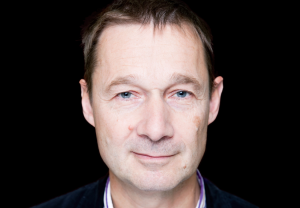
Bachmann, Klaus
Principal Investigator
Specialization
historian, political scientist, lecturer in German, specializies in issues of European integration, totalitarian regimes and transitional justice
Role in the Faculty
{"funkcja-na-wydziale0":{"Funkcja":"","\u0141\u0105cznik":"","Nazwa w mianowniku":"Faculty of Social Sciences in Warsaw"}}
Role in the Department
{"funkcja-w-katedrze0":{"Funkcja":"","\u0141\u0105cznik":"","Nazwa w mianowniku":"Department of Politics and Public Policy"}}
Role in the Institute
{"funkcja-w-instytucie0":{"Funkcja":"","\u0141\u0105cznik":"","Nazwa w mianowniku":"Institute of Social Sciences"}}
First and last name
Klaus Bachmann
Academic degree or title
Professor
Email
This email address is being protected from spambots. You need JavaScript enabled to view it.
Discipline
political-science-and-public-administration
Role in the Research Center
{"funkcja-w-centrum0":{"Funkcja":"Head","\u0141\u0105cznik":"of the","Nazwa w mianowniku":"Center for the Study of History and Justice"}}
Professor Klaus Bachmannhistorian, political scientist, lecturer in German, specializies in issues of European integration, totalitarian regimes and transitional justice
Methodology
This is an interdisciplinary project that brings together historians, political scientists and lawyers specializing in international criminal law, political science, sociology of law (behavior of judges), and historiography.
The project comprises of three phases:
- Preparation and first workshops to agree terminology and the research procedure (i.e., interview questionnaire, topics, and schedule)
- Field research (i.e., interviews and literature search)
- Preparation of publications.
Project Consortium
The project is carried out by the following consortium members:
- SWPS University, Poland
- University of Műnster, Germany
Research team
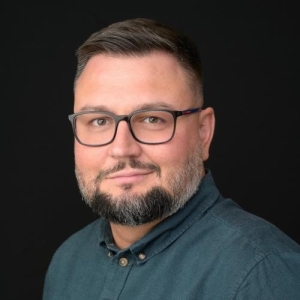
Cyuńczyk, Filip
Role in the Faculty
{"funkcja-na-wydziale0":{"Funkcja":"","\u0141\u0105cznik":"","Nazwa w mianowniku":"Faculty of Law in Warsaw"}}
Role in the Department
{"funkcja-w-katedrze0":{"Funkcja":"","\u0141\u0105cznik":"","Nazwa w mianowniku":"Department of Public and International Law"}}
Specialization
laywer specializing in sociology and history of law
First and last name
Filip Cyuńczyk
Academic degree or title
Ph.D. / Assistant Professor
Email
This email address is being protected from spambots. You need JavaScript enabled to view it.
Role in the university
Rector's Representative for Student Affairs
Role in the Research Center
{"funkcja-w-centrum0":{"Funkcja":"","\u0141\u0105cznik":"","Nazwa w mianowniku":"Center for the Study of History and Justice"}}
Ph.D. / Assistant Professor Filip Cyuńczyklaywer specializing in sociology and history of law
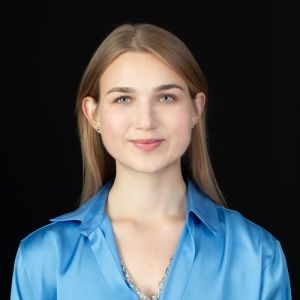
Kuna, Dominika
First and last name
Dominika Kuna
Academic degree or title
M.A. / Teaching Assistant
Email
This email address is being protected from spambots. You need JavaScript enabled to view it.
Role in the Faculty
{"funkcja-na-wydziale0":{"Funkcja":"","\u0141\u0105cznik":"","Nazwa w mianowniku":"Faculty of Law in Warsaw"}}
Role in the Department
{"funkcja-w-katedrze0":{"Funkcja":"","\u0141\u0105cznik":"","Nazwa w mianowniku":"Department of Public and International Law"}}
Role in the Institute
{"funkcja-w-instytucie0":{"Funkcja":"","\u0141\u0105cznik":"","Nazwa w mianowniku":"Institute of Law"}}
Role in the Research Center
{"funkcja-w-centrum0":{"Funkcja":"","\u0141\u0105cznik":"","Nazwa w mianowniku":"Center for the Study of History and Justice"}}
M.A. / Teaching Assistant Dominika Kunalawyer
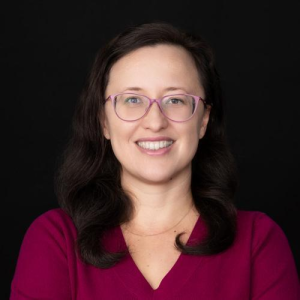
Novikova, Kateryna
First and last name
Kateryna Novikova
Academic degree or title
Ph.D. / Assistant Professor
Role in the Faculty
{"funkcja-na-wydziale0":{"Funkcja":"Dean's Representative for Internationalization","\u0141\u0105cznik":"at the","Nazwa w mianowniku":"Faculty of Social Sciences in Warsaw"}}
Role in the Department
{"funkcja-w-katedrze0":{"Funkcja":"","\u0141\u0105cznik":"","Nazwa w mianowniku":"Department of Sociology"}}
Email
This email address is being protected from spambots. You need JavaScript enabled to view it.
Specialization
sociologist
Role in the Research Center
{"funkcja-w-centrum0":{"Funkcja":"","\u0141\u0105cznik":"","Nazwa w mianowniku":"Center for the Study of History and Justice"}}
Institute
Center for the Study of History and Justice
Ph.D. / Assistant Professor Kateryna Novikovasociologist, historian, and translator
Practical application of results
Our project will have the following practical outcomes:
- Culture and knowledge transfer, which on the one hand analyzes mutual interactions between the public opinion and the media, and on the other hand — court decisions, with a focus on German, Polish, Ukrainian, and Serbian public opinion
- Support for the process of Europeanization concerning the adoption of the international criminal law concepts and the rules of the international law in national jurisdictions
- An overview of the change concerning the norms and values in the area of criminal law, analyzes of its impact and the effect on the judges
- Significance for the Polish-German relations — expanding knowledge on the role of the international criminal law in Poland and Germany and sparking an academic discussion that would lead to a better understanding of each other’s views.