Migrations, border regimes, and policies
Discover Joint Master's in PATHS Forces Migration at SWPS University
The joint Master's program — PATHS Forced Migration: Europe in a Global Context — focuses on the urgent and complex challenges of forced migration, acknowledging the increasing global displacement driven by geopolitical instability, environmental concerns, and socio-economic factors. The program aims to prepare professionals with the essential knowledge and skills to understand and effectively tackle these multifaceted issues.
PATHS provides a unique blend of interdisciplinary and intercultural perspectives within a cohesive curriculum. It incorporates mobility pathways, research opportunities, and close collaboration with local, national and international organizations, enhancing students' competencies and adaptability.
What will you learn
This interdisciplinary program, grounded in sociology and enriched by insights from political science, law, pedagogy, and psychology, offers a deep understanding of migratory phenomena. Beyond a solid theoretical foundation, we ensure that our graduates gain extensive practical experience. During the program, you will:
- Master qualitative and quantitative research methods
- Participate in intensive field training through specialized internships
- Gain professional experience within public institutions and intergovernmental organizations (IGOs)
- Engage directly with individuals who have been forced to migrate
- Network with global experts specializing in diverse aspects of migration, from children’s rights to border control
A key element of the program is its focus on practical experience. During the second semester, alongside mandatory joint courses, you will complete an internship at an organization of your choice to apply your learning in a professional setting.
Throughout your studies, in addition to the core modules of your chosen path, you will have the opportunity to expand your learning with extracurricular courses offered by ERUA mobility partners.
Everything that you need to know about the program is contained in the PATHS Student Handbook, from detailed description of the program, admission requirements and regulations, fees, and practical information (e.g., accommodation, legalization of stay, etc.).
Review and download the handbook
Joint Master's Degree
PATHS Forced Migration: Europe in a Global Context is a joint Master’s degree program offered by selected member universities of the European Reform University Alliance (ERUA), including:
Study Program
Forced migration, border management, and refugees' reception
Through mobility across European universities located in countries of transit and reception, hands-on research, and an international classroom environment, students develop interdisciplinary expertise, critical thinking, and practical research skills. The program combines seminars, fieldwork, and a professional internship, culminating in a joint master’s thesis assessed by faculty from multiple partner institutions.
You begin at one of the entry universities: Europa-Universität Viadrina Frankfurt (Oder) or Université Paris 8 or New Bulgarian University.
Additionally, regardless of your selected study path, you take joint online or hybrid foundation courses that establish common conceptual and methodological foundations of the program.
You, and all other students in your cohort, move to SWPS University in Poland to attend the Methods Block courses. Subsequently, you complete your internship.
You move to the university that offers your selected study path, i.e., the University of the Aegean or the University of Macerata, and pursue path-specific courses.
Additionally, all students in the cohort participate in the joint Research Colloquium.
You write your Master's thesis in English under the co-supervision of academics from at least two partner institutions relevant to your chosen study path.
Next, you defend your thesis during a hybrid session with one Exam Committee member present in the same location with you, while others may participate online.
Three study paths
Focus on your interests
We offer three study paths, each focusing on a different aspect of migration. Your selected path determines the international university rotation you will follow.
PLEASE NOTE: the Admissions Committee reserves the right to offer you a study path different from your initial selection.
European University Viadrina (Germany) — SWPS University (Poland) — University of the Aegean (Greece)
Examine how global inequalities as well as ecological and geopolitical instability shape forced migration. Gain a deep understanding of the legal, technological, and social dimensions of European border regimes. Analyze interactions between migration policies as well as global and racialized inequalities. Develop the critical skills needed to design ethical, socially just, and evidence-based solutions.
University of Paris 8 (France) — SWPS University (Poland) — University of Macerata (Italy)
Explore the multifaceted experiences of young people in forced displacement through the lenses of law, psychology, and sociology. Analyze how age, gender, and race intersect within European migration regimes and border experiences. Develop expertise in children’s rights, intercultural communication, and trauma-informed care to design inclusive, ethical, and evidence-based reception systems.
New Bulgarian University (Bulgaria) — SWPS University (Poland) — University of Macerata (Italy)
Analyze the politics of forced migration and displacement. Trace how securitarian, humanitarian, rights-based, economic, and cultural frameworks shape public narratives. Examine how these narratives influence policy-making and how interest groups use these frames to advance or block reforms. Map key actors, conduct rigorous analysis, and develop skills to craft evidence-based, rights-respecting policy options.
One diploma, a joint degree, and a world of possibilities
Review the advantages of international education
Interdisciplinary program and global perspective
What will you gain?

Joint Master’s degree
Upon successful completion of the program, you will be awarded a joint Master’s degree, recognized across Europe and formally certified by six European partner universities.

Practical career-related experience
Through intensive field training and internships within public institutions, IGOs, and NGOs, working directly alongside displaced populations and global migration experts, you will gain valuable experience.

Professional network
You will build an international professional network across distinct academic and cultural environments, fostering the adaptability and cross-border expertise essential for a career in global NGOs or policy institutions.
Career prospects
Possibilities are endless
As a graduate of the PATHS Forced Migration: Europe in a Global Context joint Master’s program, you will possess the theoretical depth and practical expertise in migration governance, border systems, and policymaking required to work in complex migration contexts worldwide, including areas such as:
- Migration management and border policy agencies at national and European levels
- International organizations and NGOs working with refugees and displaced persons
- Diplomatic and intergovernmental relations
- Public administration
- Humanitarian and development organizations
- Social services and community integration
- Policy advising and governmental institutions
- Legal advocacy and refugee rights
- Research institutions and think tanks focusing on migration and border studies
- Socio-economic development and research
- Education, training, and intercultural mediation
- Media, advocacy, and public information on migration issues and refugee rights

Nasara Cabrera Abu
Ph.D., University of Las Palmas de Gran Canaria

Chiara Aleffi
Research Fellow, University of Macerata

Samuel Boussion
Ph.D. / Associate Professor, University of Paris 8

Fabrizio Marongiu Buonaiuti
Full Professor, University of Macerata
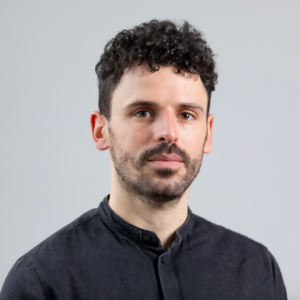
Antoine Burgard
Ph.D. / Senior Lecturer, University of Paris 8

Fabio Clementi
Ph.D. / Associate Professor, University of Macerata

Jean Christophe Coffin
Ph.D. / Associate Professor, University of Paris 8

Edith Cognigni
Ph.D., Associate Professor, University of Macerata

Olga Czeranowska
Ph.D. / Assistant Professor

Rosita Deluigi
Ph.D. / Associate Professor, University of Macerata

Jane Freedman
Professor, Paris 8 University

Stratos Georgoulas
Professor, University of the Aegean

Agnieszka Golińska
Ph.D. / Assistant Professor

Cristina Grieco
Ph.D. / Assistant Professor, University of Macerata

Marija Grujić
Ph.D., European University Viadrina

Kira Kosnick
Professor, University of Viadrina
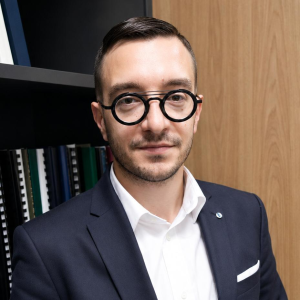
Christos Kouroutzas
Ph.D. / Associate Professor, University of the Aegean

Mouna Maaroufi
Ph.D., European University Viadrina

Lucas Andrés Pérez Martín
Ph.D., University of Las Palmas de Gran Canaria

Nikos Nagopoulos
Professor, University of the Aegean

Vanina Ninova
Ph.D., New Bulgarian University

Dimitris Paraskevopoulos
Ph.D., Assistant Professor, University of the Aegean

Ilaria Pirone
Professor, Paris 8 University

Michalis Poulimas
Ph.D. / Assistant Professor, University of the Aegean

Paula Pustułka
Ph.D. / Associate Professor
Antoine Rivière
Ph.D. / Associate Professor, University of Paris 8
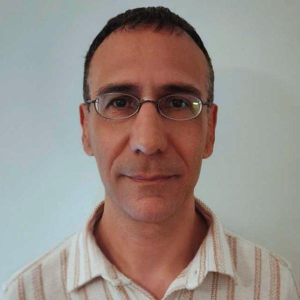
Manos Savvakis
Professor, University of the Aegean

Evelina Staykova
Ph.D. / Associate Professor, New Bulgarian University

Manuel Teresi
Ph.D., University of Macerata

Laura Vagni
Full Professor, University of Macerata

Nikolaos Xypolytas
Ph.D. / Assistant Professor, University of the Aegean
Application
Step by step
- Review admission requirements
- Fill in the application form
- Upload and wait for verification
- Pass an entrance exam (see the "Entrance exam" section below)
- Conclude an electronic agreement on the payment terms for studies
- Deliver required original documents to the Admissions Office
- Download your Admission Decision from the Application Portal
- Pay the tuition fee
General admission requirements for international candidates
PLEASE NOTE: The application path you will take depends on your citizenship status and the country where your secondary school or university diplomas were issued. Before you proceed further, please establish, which general requirements apply to you
Detailed admission requirements for the PATHS program
During the admission process, you can score maximum of 100 points, including: cover letter (max. 50 points), supporting documents — achievements and experience (max. 20 points), and entry exam (max. 30 points).
Bachelor’s degree in social sciences or humanities.
Degrees in other fields may also be considered, provided the applicant demonstrates relevant work experience in the field of migration. The recognition of alternative academic backgrounds will be assessed by the Admissions Committee on a case-by-case basis.
A cover letter, explaining your motivation for choosing a specific study path within the program. The letter must meet the following formal criteria:
- Language: English
- Formatting: font Times New Roman, 12 pt., 1.5 line spacing, standard margins
- Length: maximum 900 words
- File format: PDF
- Include your full name and title of the program
Letter(s) of recommendation from academic or professional referees (max. 2)
Certificates or documented evidence of extracurricular activities, such as voluntary work, internships, community engagement, or related initiatives.
During your study journey, you will be moving from country to country and from university to university. This means that you will likely need a different insurance policy for each of these countries.
To begin, please check with the first university in your study path what type of medical insurance they require and proceed accordingly.
Please remember, before moving to your next destination, you must purchase a new insurance policy recognized by that specific university and host country to ensure that you always have medical insurance coverage.
Entrance exam
If you meet the formal requirements of the program, you will take an online entrance exam consisting of 30 single-response multiple-choice questions. The questions will draw upon your general knowledge of four key disciplines relevant to the PATHS study program, i.e., sociology (21 questions), political science and public administration (4 questions), law (3 questions), and psychology (2 questions). To help you prepare for the exam, we provide you with an Entrance Exam Preparation Guide and a few sample question below:
Here are a few sample questions that you may encounter during the exam:
- What does "forced migration" generally refer to?
- What does quantitative methodology in migration research usually focus on?
- Which doctrine frames migration as a national security issue?
- How do the effects of post-traumatic stress disorder manifest?
Tuition
Application fee
Application fee in the amount of PLN 85.00 should be paid via PayU while submitting university application through the Application Portal
The application fee is non-refundable unless: the program of study that you applied to has been cancelled (except when you decide to enroll in a different program of study at SWPS University).
| 2026-2027 Tuition Fee | Amount |
|---|
| 2 installments |
EUR 4,500 / each |
| 1 installment |
EUR 9,000 |
Frequently asked questions
- What does the application process for international candidates at SWPS University look like?

- The application process for international candidates at SWPS University is completed online. You create an account in our Application Portal, complete the application form, upload the required documents, and pass an entry exam (if required for your study program). If you pass these preliminaries successfully, you conclude the electronic agreement on the payment terms for studies, deliver original documents to the Admisions Office, download your Admission Decision from the Application Portal, and pay the tuition fee.
- What are the admission requirements for international candidates at SWPS University?
- The admission process for international candidates at SWPS University depends on your citizenship and the country that issued your diploma. Different rules and required documents apply to different groups of international candidates.
You may also need to provide proof of English proficiency or meet additional program-specific requirements.
Review our admissions guide for international candidates to choose your application path and see the requirements for your situation. - What documents do I need to apply to SWPS University?
- The documents you need to apply to SWPS University depend on your citizenship, the country where your diploma was issued, and the program you are applying to. First, use our admissions guide to determine your application path. Then review the current admission requirements and list of required documents.
- Can I study at SWPS University with a foreign diploma?
- International candidates can study at SWPS University with a foreign diploma, but the admission requirements depend on the country where the diploma was issued and the requirements for studying in Poland. Some international candidates must obtain confirmation from the Polish National Agency for Academic Exchange (NAWA) that their diploma is equivalent to a Polish diploma before they can be admitted to a university.
You can start your application before receiving a NAWA decision, but you cannot complete the admission process or receive a final admission decision until the required diploma recognition has been confirmed.
Use our admissions guide to check whether your diploma requires recognition and what steps apply to your situation. - Do I need an English proficiency certificate to apply to SWPS University?
- Yes, international candidates must provide an English proficiency certificate to apply to SWPS University. For most programs, the minimum required level is CEFR B2, although some programs require CEFR C1.
SWPS University accepts language certificates approved under Polish regulations. Check the current list of accepted certificates to see which documents are recognized. - Do I need to take an entrance exam to study at SWPS University?
- Not all candidates need to take an entrance exam to study at SWPS University. Whether an entrance exam is required depends on the country where your diploma was issued and the program you are applying to.
If an entrance exam is part of your admission process, it is conducted online. After your application and documents have been verified, you will receive information about the exam format, date, and next steps in the Application Portal.
Review our admissions guide to check whether an entrance exam applies to your situation. - How much does it cost to study at SWPS University?
- Tuition fees at SWPS University vary depending on the program you choose. You can find the current tuition fees on each program webpage, along with information about payment options and tuition installments. Detailed payment terms are also included in the Study Agreement.
- Does SWPS University offer student accommodation?
- SWPS University does not operate its own student dormitories, but we work with trusted providers of private student accommodation, such as NEST Student Accommodation and other student housing providers. We also collaborate with an agency that helps students find rental accommodation.
Review our accommodation guide to explore housing options near our campuses. - What study tracks does the PATHS Forced Migration program offer?
- You can choose one of the three study tracks, each focusing on a different aspect of migration: EU Border Regimes, Inclusion of Children and Minors, and Politics and Policies.
- Where will I study if I am accepted into the PATHS Forced Migration program?
- Student mobility is an integral component of the PATHS Forced Migration program. Depending on your chosen path, you will study in three different countries, which may include Bulgaria, France, Germany, Greece, and Italy. Regardless of your selected path, you will complete your middle semester in Poland.
- What ERUA member universities offer studies in PATHS Forced Migration?
- The ERUA member universities that offer studies in the PATHS Forced Migration include the European University Viadrina (Germany), New Bulgarian University (Bulgaria), SWPS University (Poland), University of the Aegean (Greece), University of Macerata (Italy), University of Paris 8 (France).
- Is the PATHS Forced Migration: Europe in a Global Context joint master’s program a solid foundation for a future career?
- The PATHS Forced Migration joint master’s program combines a theoretical foundation with extensive practical experience gained through internships in professional settings. Graduates gain versatile, transferable skills, build an international professional network across Europe, and earn a joint diploma awarded by six universities, recognized throughout the European Union.
- Are scholarships available for candidates applying to the PATHS Forced Migration: Europe in a Global Context program?
- Yes. Candidates applying to the PATHS Forced Migration program can apply for a specially-tailored scholarship. Learn more about the "Path to Education" scholarship.