Culture as a driver of sustainable development
The report is a response to the MONDIACULT 2022 declaration, where ministers of culture worldwide recognized culture as a public good and an independent pillar of sustainable development. It draws on analysis of more than 1,200 national and local reports from 2019 to 2024. As Professor Ilczuk observes, this was a genuinely global project, demanding extensive data and a team of authors and editors from every continent.
Together with Anna Karpińska, I represented Central Europe. We co-authored the fourth chapter, presenting the economic context of the global cultural ecosystem, including its industries and creative sectors. Our findings are clear: culture is increasingly shaping the future of sustainable development, but it is not simply one sector among many — it is a dynamic system of meaning, belonging, creativity, and well-being. Like any system, it needs sustained investment, coordination, and vision.
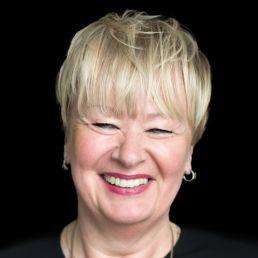
Professor Dorota Ilczuk
Head of the Creative Economy Research Center
The report examines how cultural policies strengthen cultural rights and support education, digital transformation, climate action, and resilience in times of crisis. At the same time, it identifies ongoing gaps, inequalities, and systemic barriers that continue to limit culture-driven development.
The report was launched at the MONDIACULT 2025 World Conference on Cultural Policies, organized by UNESCO. The event gathered government representatives, experts, and artists from across the globe to discuss culture’s role in the global development agenda beyond 2030.
Cultural and creative sectors in the global economy
In chapter four of the report, Prof. Dorota Ilczuk and Anna Karpińska from the SWPS University's Creative Economy Research Center analyze the economic significance of the cultural and creative industries (CCIs) worldwide. They highlight that CCIs make up a substantial share of the global economy — generating roughly 3.39% of global GDP and 3.55% of global employment. Additionally, in some major metropolitan areas, their contribution can reach as high as 10% of local GDP.
The creative sectors:
- drive innovation
- play a key role in preserving, promoting, and revitalizing cultural heritage
- support tourism
- contribute to climate action
However, their economic impact is often underestimated. Challenges include measurement difficulties, high levels of informal labor, and ongoing issues in managing intellectual property rights.
Inequalities and challenges across the creative sectors
Economic and structural inequalities severely limit the sector. In high-income countries, public cultural spending per person is over 2,000 times that of low-income countries, directly restricting access to resources, infrastructure, and institutional support. Other forces deepen these gaps.
The report highlights rising gender inequalities and digital divides. Only 20% of cultural funding is allocated to women artists, while income disparities remain significant among digital creators. Additionally, creators' earnings are threatened by AI-generated content. Projections for the music and audiovisual sectors, for instance, estimate multi-billion-dollar losses by 2028.
Professor Dorota Ilczuk
Head of the Creative Economy Research Center
Public funding as a foundation for cultural sustainability
SWPS University researchers emphasize the importance of public funding for culture. They argue that combining state support, public–private partnerships, and commercial initiatives creates the right conditions for innovation and inclusive growth worldwide. They stress that while CCIs create jobs, economic value, and innovation, many jobs in culture are marked by precarious work conditions, unstable incomes, and insufficient regulatory and financial support..
They also challenge the assumption that culture can sustain itself solely through market mechanisms. Even the most profitable creative industries depend on talent and creative content developed over time — often thanks to stable, long-term public investment.
Culture at the center of public policy
The main message of the report, recurring throughout all chapters, is clear: culture is already driving sustainable development. However, to achieve its full potential, we need strong, consistent, and well-funded policy frameworks that recognize culture’s transformative role. The report’s authors, including experts from SWPS University, argue that culture should be recognized as a standalone Sustainable Development Goal (SDG) to achieve this.
The report underscores that recognizing culture as an independent SDG would confirm its transformative impact on all other goals — from education and gender equality to climate action and decent work. This shift would ensure culture is not seen merely as a means to other ends, but as a goal in itself.
Professor Dorota Ilczuk
Head of the Creative Economy Research Center
Read the UNESCO report Culture: The Missing SDG
Download the full report
Download the executive summary
Meet the co-authors of the report

Ilczuk, Dorota
Role in the Faculty
{"funkcja-na-wydziale0":{"Funkcja":"","\u0141\u0105cznik":"","Nazwa w mianowniku":"Faculty of Humanities in Warsaw"}}
Role in the Department
{"funkcja-w-katedrze0":{"Funkcja":"","\u0141\u0105cznik":"","Nazwa w mianowniku":"Department of Cultural Studies"}}
Role in the Institute
{"funkcja-w-instytucie0":{"Funkcja":"","\u0141\u0105cznik":"","Nazwa w mianowniku":"Institute of Humanities"}}
Role in the Research Center
{"funkcja-w-centrum0":{"Funkcja":"Head","\u0141\u0105cznik":"of the","Nazwa w mianowniku":"Creative Economy Research Center"},"funkcja-w-centrum1":{"Funkcja":"","\u0141\u0105cznik":"","Nazwa w mianowniku":"East Asian Civilization Research Center"}}
Specialization
Professor of Economics and Cultural Management
First and last name
Dorota Ilczuk
Academic degree or title
Professor
Email
This email address is being protected from spambots. You need JavaScript enabled to view it.
Discipline
culture-and-religion-studies
Professor Dorota Ilczukeconomst specializing in creative industries management

Karpińska, Anna
Role in the Research Center
{"funkcja-w-centrum0":{"Funkcja":"","\u0141\u0105cznik":"","Nazwa w mianowniku":"Creative Economy Research Center"}}
Specialization
cultural researcher, cultural project coordinator
First and last name
Anna Karpińska
Email
This email address is being protected from spambots. You need JavaScript enabled to view it.
Discipline
culture-and-religion-studies
Institute
Creative Economy Research Center
Role in the Department
[]
Professor Anna Karpińskacultural researcher, cultural project coordinator